Immy Lawlor
This article was written for the “Celebrating Class” blog series, exhibition and conference.
I take pride in being mixed race and from a working-class background, and I am better at navigating alienating experiences.
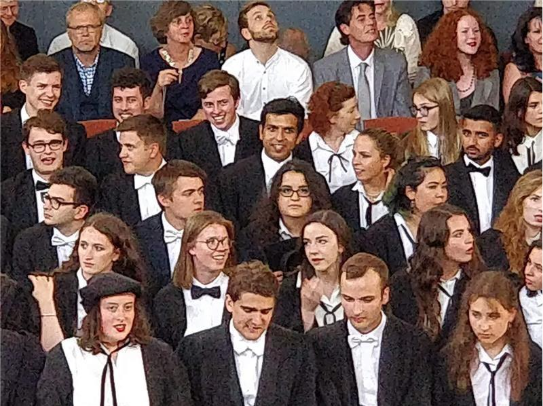
Me at graduation
I didn’t openly identify as mixed race or working class until University where, for the first time in my life, I’d never felt so brown and poor. These differences felt glaringly obvious to me, even if they weren’t to others. Some of them might not seem that deep, like friends who had never eaten corned beef or taken the bus. Others highlighted how differently we saw the world.
I reached a point during my undergraduate studies where I had to face these challenging topics, instead of hiding my identity and pretending these differences didn’t exist. Now, I take pride in being mixed race and from a working-class background, and I am better at navigating alienating experiences working in Higher Education.
Reading is my hometown, and I feel privileged to have enjoyed a rich multicultural upbringing here, despite having very little money. Redlands Primary School is a stone’s throw away from Whiteknights and while pupils came from mix of socio-economic backgrounds, everyone came together to celebrate every cultural festival under the sun. Aunties would come into school to do henna on our hands for Eid. Everyone learnt to play steel pans in Year 5 and 6. Our international evenings included Nepalese dancing with a side of rice and peas.
However, I spent my teens desperately cosplaying as white and middle class to fit into the classical music world as an aspiring violinist, burying details about my upbringing to fit in. Even with a decade of red hair dye and avoiding of the sun to prevent tanning, there is only so long one can spend denying what they are and where they came from.
In my second year of university, I looked in the mirror and didn’t recognise myself: hair dyed red to disguise the dark brown of my Asian ancestry, accent manipulated to be ‘posh’ like my peers, dressed in cricket-style white jumpers and smart tartan skirts. I had moulded myself to fit into the spaces I was occupying, but I physically and mentally couldn’t do it anymore.
In accepting that I am brown and from a working-class background, I opened up a can of worms intertwined with the messy history of British class identity. Despite the social and economic changes under Thatcher, the term working class continues to be used in varied and sometimes conflicting ways, leading to ongoing debate about who it describes. I would never deny the history of the working class in this country, but clinging onto the working-class archetype of post-war council housing and manual labour jobs can exclude ethnic minorities from discussions of the working-class experience.
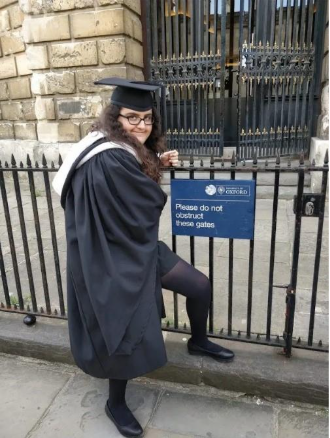
A model student
Being mixed race, you get used to not fitting neatly into boxes, and class is no exception to this. I don’t fit the Learning to Labour (Willis) depiction of a working-class child aspiring to go into a manual labour role upon leaving school. I love learning and I wanted nothing more than to go to University. I was kind of a ‘chav’ for some of my youth in the New Labour era, but I didn’t wear quite the same clothes or participate in anti-social behaviour like the harmful stereotype stipulates. My passport says British and I usually tick ‘Mixed – White and Asian’ on forms, but my DNA test shows I am a mixture of Central Asian, Bengali, Irish, English and Scottish ancestry – thanks to the movement of a lot of immigrants.
We have more in common as working-class communities than separate us. It’s only when examining the myth of British working-class identities that the presumed bind to whiteness falls apart. My name, Imogen Lawlor, is a wonderful mix of British Celtic and Irish origin, but names that may be considered typically ‘British’ tend not to be of British origin (Tom is Aramaic and Greek, Harry derives from German, Matthew is Hebrew). I wouldn’t be surprised if those marching to ‘Unite the Kingdom’ have less British DNA than me. In fact, this genuinely happened when my white British partner took a DNA test, and discovered his ancestry was mostly French and German (which are coincidentally both languages I speak, and he doesn’t!). There is a myth of what working class is meant to be that some cling onto, preventing the class solidarity between ethnic groups that we sorely need in this country.
I would argue University can be the ultimate equaliser for working-class people of all races. It is a space where these petty differences of who is allowed to be working class don’t matter, because all of you have in common that don’t fit into the white and middle-class norm. When I attended the first-generation society at Oxford, it was a mixture of ethnicities with people fitting multiple definitions of what it meant to be ‘first gen’. I looked around and thought “Oh good, I’ve found the normal people who are like me” and I didn’t care to what extent they aligned with ‘working class’ or ‘first gen’ definitions. It was just nice to talk to people who understood what I was going through, where I could openly discuss my challenges and navigate my feelings about my identity.
Growing up in Reading, I was definitely aware of the University, but less as a space for learning and more as the green fields we used for sports days, concerts in the Great Hall and walks round the lake. Navigating the University as a member of staff, I was shocked at how white and middle class the staff body is. It’s jarring how you can enter a culturally different world when you step on campus as an employee. I found my safe space in the Race Equity Network, but the staff community here is not representative the communities in the rest of Reading. Moreover, what I have described is not an uncommon experience. It is vital we consider how working-class students navigate campus buildings, social spaces and learning.
It’s okay to admit out loud that University can be an alienating space for a wide range of people, because admitting that is the first step in breaking down barriers.
– Immy works as Student Recruitment and Access Officer for the University of Reading.